
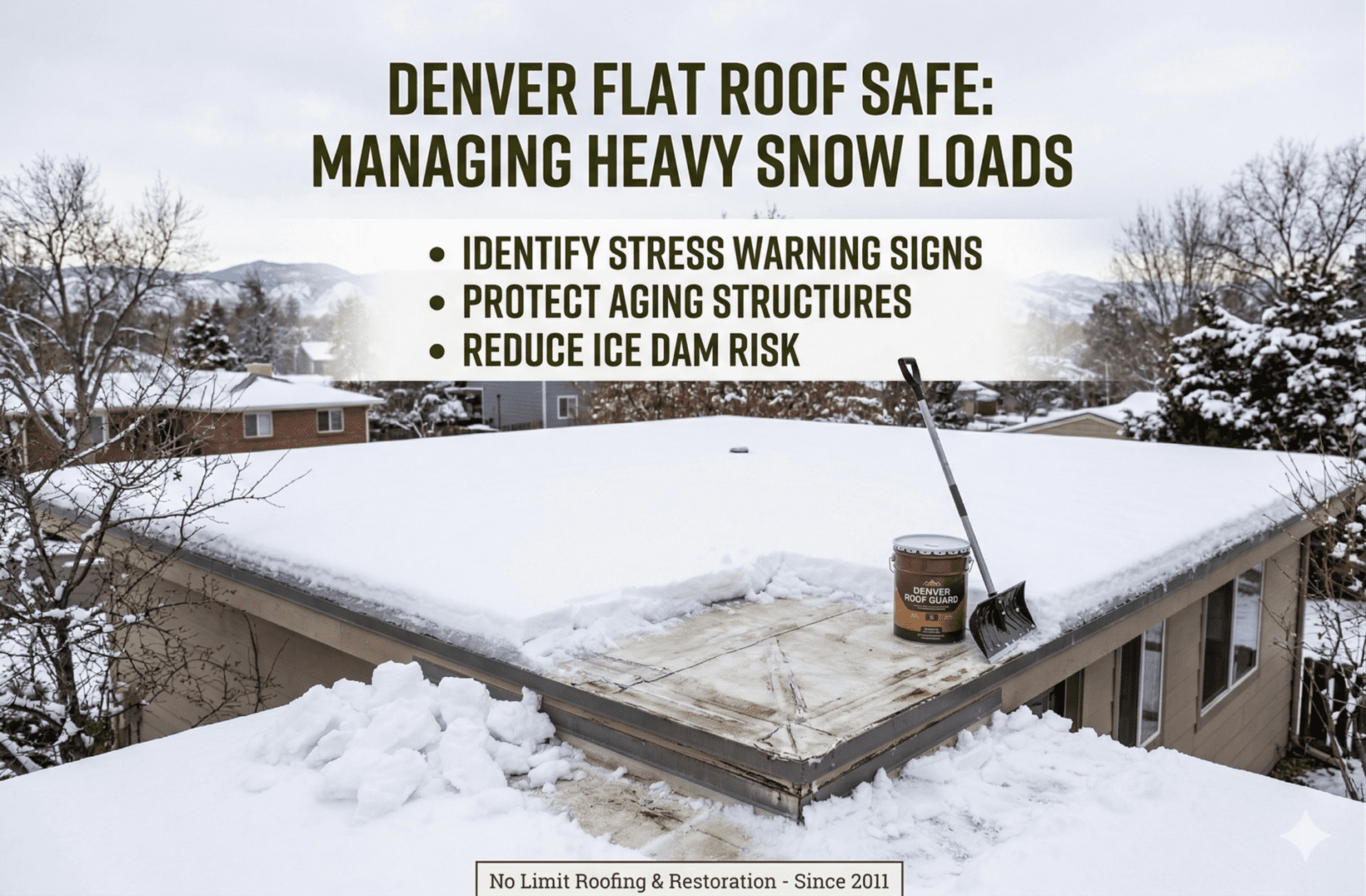
What Heavy Snow Loads Do to Denver Roofs (snow load roof Denver)
Winter in Denver isn’t just about scenic snowfall—it’s about what that snow is doing to your roof. If you own a flat or older home, understanding snow load roof Denver risks is critical. Heavy, persistent snow combined with the Front Range’s freeze-thaw cycles can quietly weaken your roof structure long before you notice a problem.
For many homeowners, the danger isn’t obvious until damage has already begun. This guide breaks down how snow loads impact roofs in Denver, what warning signs to watch for, and how to protect your home before winter turns costly.
How Snow Load Affects Roofs in Denver
Denver’s climate is unique. Snow doesn’t just fall—it melts under sun exposure, refreezes overnight, and repeats the cycle. This pattern creates uneven weight distribution and hidden stress points across your roof.
On flat and older roofs, this is especially dangerous because:
- Snow accumulates instead of sliding off
- Drainage systems can clog or freeze
- Structural materials may already be weakened
When snow piles up and becomes compacted or saturated, it becomes significantly heavier. That’s when roof collapse snow risks start to increase, particularly during late winter or early spring when melting begins.
Why Flat & Older Roofs Are More Vulnerable
Not all roofs handle snow the same way. Flat and aging roofs in Denver face higher risk due to design and wear.
Flat Roof Challenges
Flat roofs don’t shed snow efficiently. Instead, they:
- Hold snow for longer periods
- Develop pooling water during snowmelt
- Experience added pressure from ice buildup
This constant weight and moisture exposure can accelerate winter roof damage Colorado homeowners often underestimate.
Aging Roof Structures
Older homes across Denver may not have been built for today’s weather extremes. Over time:
- Wood framing can weaken
- Fasteners and supports loosen
- Previous repairs may reduce structural integrity
When heavy snow loads hit, these vulnerabilities compound quickly.
The Hidden Dangers of Freeze-Thaw Cycles
Denver’s sunny winter days can be misleading. Snow melts during the day, then refreezes at night—creating a cycle that stresses roofing materials.
Ice Dams Formation
When melting snow refreezes at roof edges, ice dams form. These block proper drainage and force water back under shingles or roofing membranes.
This can lead to:
- Interior leaks
- Insulation damage
- Mold growth
Structural Expansion and Contraction
Repeated freezing and thawing causes materials to expand and contract. Over time, this leads to:
- Cracks in roofing materials
- Separation at seams and joints
- Reduced lifespan of your roof
These issues may not be visible immediately but contribute heavily to long-term winter roof damage Colorado homes experience.
Warning Signs Your Roof Is Under Snow Stress
Most homeowners don’t think about their roof until something goes wrong. But there are early warning signs that snow load is becoming a problem.
Watch for:
- Sagging areas on your roof
- Interior ceiling cracks or bowing
- Doors or windows sticking (structural shift)
- Water stains or leaks after snowstorms
- Unusual creaking sounds during heavy snow
If you notice any of these, it’s important to act quickly before damage escalates.
Preventing Roof Collapse from Snow Load
The good news is that snow-related roof damage is largely preventable with the right approach.
Smart Winter Maintenance
- Remove excessive snow buildup safely
- Keep gutters and drains clear
- Monitor roof conditions after major storms
Professional Inspections
Routine inspections are one of the most effective ways to prevent structural issues. A local expert understands how snow load roof Denver conditions affect different roofing systems.
If you’re unsure about your roof’s condition, scheduling an inspection through our Roofing Services can help identify risks early and prevent costly repairs.
Quick Winter Roof Safety Checklist
Use this simple checklist to stay ahead of snow-related issues:
- Check your roof after heavy snowfall
- Look for ice dams along edges
- Clear gutters before winter begins
- Watch for interior warning signs
- Schedule a professional inspection annually
Staying proactive can make the difference between minor maintenance and major structural damage.
How Denver’s Climate Increases Long-Term Risk
Living along the Front Range means dealing with rapid weather changes. Snowstorms can be followed by sunshine, then freezing temperatures overnight.
This combination leads to:
- Faster material wear
- Increased moisture exposure
- Higher likelihood of hidden damage
Flat and older roofs feel this impact the most, especially when maintenance has been delayed.
Understanding how local weather patterns affect your home allows you to make smarter decisions and avoid unexpected repairs.
Protecting Your Home Before Winter Hits
Preparation is everything when it comes to roof safety in Denver. Waiting until mid-winter to address issues can limit your options and increase costs.
A pre-winter inspection allows you to:
- Identify weak structural areas
- Address drainage problems
- Reinforce vulnerable sections
Taking action in November—before peak snowfall—gives you the best chance to protect your home throughout the season.
Final Thoughts: Stay Ahead of Snow Load Risks
Heavy snow doesn’t have to mean heavy damage. With the right awareness and preparation, you can protect your roof and avoid the most common causes of roof collapse snow issues in Denver.
If you own a flat or older roof, staying proactive is essential. Small issues can quickly escalate under snow load pressure, especially with Colorado’s unpredictable winter patterns.
If you’d like peace of mind before the next storm, consider scheduling a free roof inspection. A local expert can assess your roof’s condition and help you prepare for the months ahead—without pressure, just practical guidance tailored to your home.