
Emergency Roof Leak Denver in Winter: What to Do Immediately
If you’re dealing with an emergency roof leak Denver homeowners often face during winter, you’re not alone. Sudden leaks during freezing temperatures can feel overwhelming, especially when snow, ice, and wind are all working against your home.
In the Denver Metro area, winter roof leaks are often caused by rapid weather shifts—snow accumulation followed by daytime melting and overnight freezing. Acting quickly can help limit damage and protect your home until permanent repairs are completed.
Why Winter Roof Leaks Are Common in Denver
Denver’s Front Range climate creates the perfect conditions for roof problems in winter.
Heavy snowfalls, combined with freeze-thaw cycles, put constant stress on roofing systems. When snow melts during the day and refreezes at night, water can work its way under shingles and into your home.
Common Causes of Winter Roof Leaks
- Ice dams forming along roof edges
- Cracked or lifted shingles
- Flashing damage around vents and chimneys
- Clogged or frozen gutters
- Previous storm damage that went unnoticed
These issues often remain hidden until water begins entering your home.
What to Do Immediately When You Notice a Leak
When you spot water coming through your ceiling or walls, quick action matters.
Step-by-Step Emergency Response
- Contain the water using buckets or containers
- Move furniture and valuables away from the leak
- Place towels or plastic sheets to limit water spread
- Relieve pressure if a ceiling bulge forms (carefully puncture to drain)
- Avoid climbing onto the roof in icy conditions
These steps won’t fix the issue permanently, but they help minimize interior damage.
Understanding Ice Dams and Winter Roof Leaks
Ice dams are one of the leading causes of winter roof leaks in Denver.
How Ice Dams Form
- Heat escapes from your attic and melts snow on the roof
- Melted water flows down toward colder edges
- Water refreezes, forming a barrier (ice dam)
- Water backs up under shingles and leaks inside
Why They’re a Serious Issue
- Water intrusion can damage insulation and drywall
- Hidden moisture can lead to mold growth
- Repeated freeze-thaw cycles worsen the problem
Addressing ice dams early is key to preventing ongoing damage.
Temporary Fixes vs Permanent Roof Repair
During winter, not all repairs can be completed immediately due to weather conditions.
Temporary Solutions
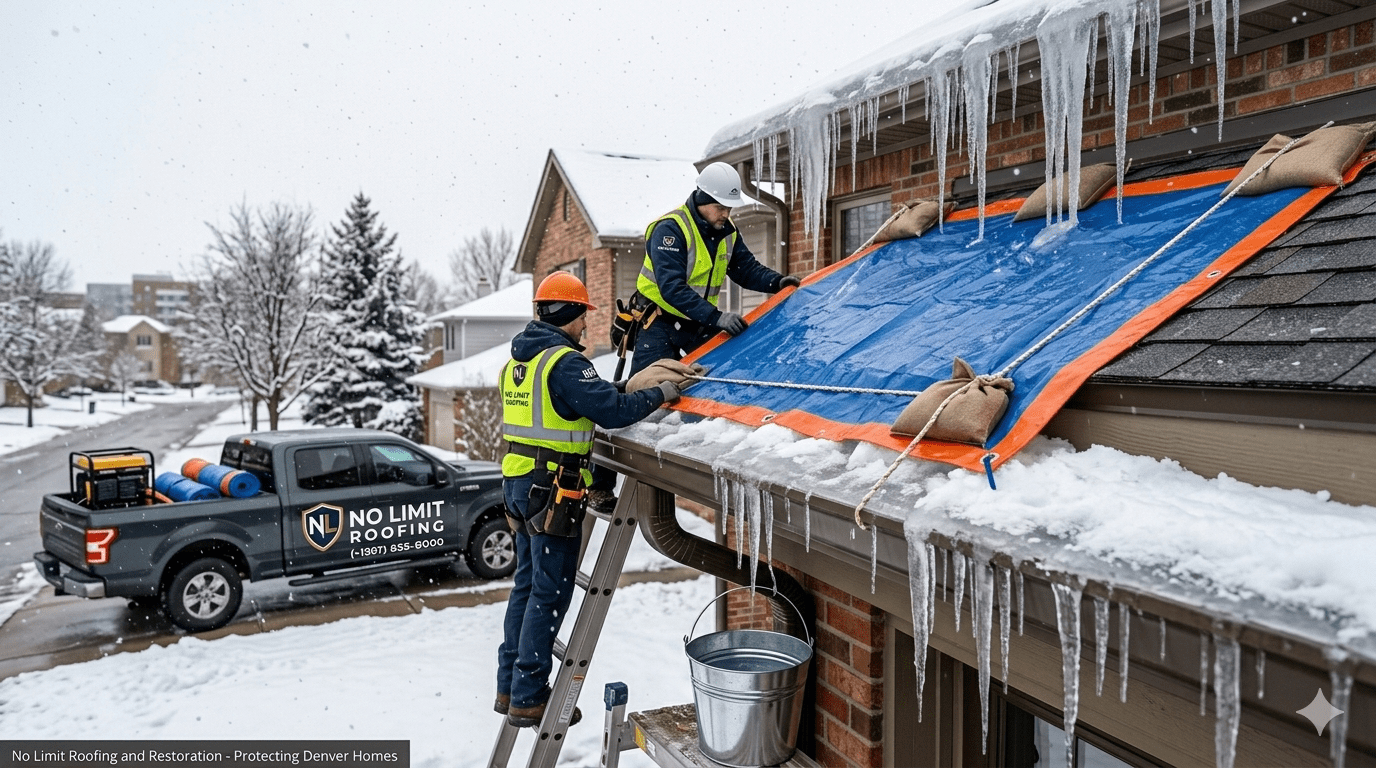
- Emergency tarping
- Sealing exposed areas
- Ice removal (by professionals)
Permanent Repairs (When Weather Allows)
- Shingle replacement
- Flashing repair
- Structural roof fixes
- Full roof repair after snow damage
If you’re dealing with roof repair snow issues, a temporary solution can stabilize your home until a full repair is possible.
Signs of Storm Damage You Shouldn’t Ignore
Sometimes leaks don’t appear immediately after a storm.
Watch for these warning signs:
- Water stains on ceilings or walls
- Dripping sounds during warmer afternoons
- Ice buildup along roof edges
- Missing or damaged shingles
- Sudden increase in indoor humidity
These are all indicators of a storm damage roof issue that may worsen if left unaddressed.
Preventing Future Winter Roof Leaks
While not all leaks are avoidable, proper preparation reduces risk.
Winter Roof Protection Checklist
- Schedule a pre-winter roof inspection
- Ensure attic insulation is adequate
- Improve ventilation to reduce heat buildup
- Clean gutters before snowfall
- Address minor roof issues early
Denver’s winter conditions—especially snowmelt followed by freezing nights—make prevention essential.
Why Local Experience Matters in Emergency Roof Situations
Roofing challenges in Denver are different from other regions. The combination of altitude, snow loads, and rapid weather changes requires a local understanding of materials and repair strategies.
Working with a team familiar with Front Range conditions ensures that both temporary and long-term solutions are appropriate for the environment.
If you’re unsure about the condition of your roof after a leak, it’s always best to have it evaluated professionally. You can learn more about long-term solutions by exploring our Roofing Services for Denver homeowners.
When to Call for Professional Help
You should contact a roofing professional immediately if:
- Water is actively entering your home
- The leak worsens during the day
- Ice dams are visible and growing
- You suspect structural damage
Emergency situations require prompt attention to prevent further complications.
Conclusion
An emergency roof leak Denver winter homeowners face can escalate quickly, especially during periods of snow and freezing temperatures. Acting fast to contain the issue and understanding the cause can make a significant difference in protecting your home.
Winter roof leaks are often temporary symptoms of larger issues, and addressing them properly ensures long-term protection.
Get a Free Roof Inspection
If you’re dealing with a winter roof leak or want to prevent future problems, scheduling an inspection is a smart next step.
No Limit Roofing and Restoration provides professional evaluations to identify the source of leaks and recommend the right solution for your home.
Request your Free Roof Inspection today and make sure your roof is ready to handle Denver’s toughest winter conditions.