
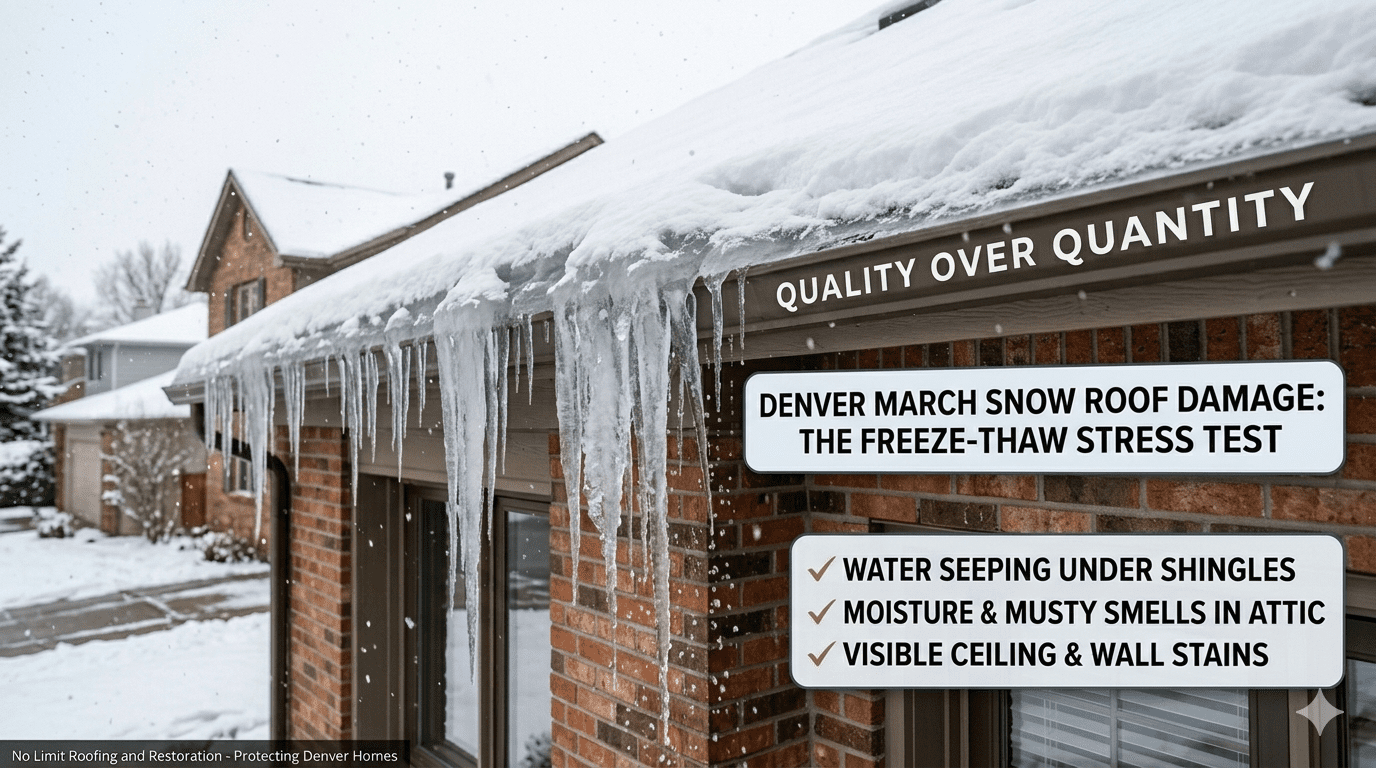
Denver March Snow Roof Damage | Spring Roof Guide
If you’ve lived in Denver for a few seasons, you’ve probably noticed something surprising: the heaviest snow often arrives just when you expect winter to wind down. This is exactly why Denver March snow roof damage becomes a real concern for homeowners across the metro area.
March storms bring a unique combination of heavy, wet snow and fluctuating temperatures. These conditions can quietly stress your roof, leading to leaks, ice buildup, and structural wear—often without immediate visible signs.
Why March Brings the Heaviest Snow in Denver
Denver’s location along the Front Range creates a distinct weather pattern.
In March, warmer air begins moving in from the south while cold air still lingers at higher elevations. When these systems collide, they produce heavy, moisture-rich snowfall—very different from the lighter snow earlier in winter.
What Makes March Snow Different?
- Higher moisture content (heavier weight on roofs)
- Rapid snow accumulation during storms
- Faster melting during daytime temperatures
- Refreezing overnight due to cold air
This constant freeze-thaw cycle is what makes March especially hard on roofing systems.
How March Snow Impacts Your Roof
Unlike mid-winter storms, March snow doesn’t just sit on your roof—it melts, shifts, and refreezes.
Common Types of Spring Snow Damage
- Water seeping under shingles
- Expansion and contraction of roofing materials
- Increased load stress from wet snow
- Formation of ice dams along roof edges
These issues can lead to long-term damage if not addressed early.
Ice Dams in Denver: A Major March Problem
One of the biggest causes of roof leaks March homeowners experience is ice dam formation.
How Ice Dams Form
- Snow melts on warmer sections of the roof
- Meltwater flows downward
- Water refreezes at colder edges
- Ice builds up and blocks drainage
Why Ice Dams Are Risky
- Water backs up under shingles
- Hidden leaks develop inside walls and ceilings
- Insulation and drywall can be damaged
Ice dams Denver homes face in March are often more severe because of repeated melting and freezing cycles.
Signs of Spring Snow Damage You Should Watch For
Not all damage is immediately obvious after a storm.
Early Warning Signs
- Water stains on ceilings or walls
- Dripping sounds during warmer afternoons
- Ice buildup along gutters and roof edges
- Shingles that appear lifted or damaged
- Moisture or musty smells in the attic
Catching these signs early can prevent more extensive repairs later.
Why Freeze-Thaw Cycles Cause Hidden Damage
March weather in Denver is unpredictable. A sunny afternoon can quickly turn into a freezing night.
The Freeze-Thaw Effect
- Snow melts during the day
- Water seeps into small gaps
- Temperatures drop at night
- Water freezes and expands
This repeated cycle weakens roofing materials over time and contributes to spring snow damage that may not be visible from the ground.
How to Protect Your Roof During March
While you can’t control the weather, you can take steps to reduce risk.
March Roof Protection Checklist
- Clear excess snow safely from roof edges
- Keep gutters free of ice and debris
- Check attic insulation and ventilation
- Monitor for signs of leaks after storms
- Schedule a professional roof inspection
These steps help minimize the impact of heavy spring snowfall.
The Importance of a Post-Winter Roof Inspection
After a long winter, your roof may have experienced months of stress—even if no obvious damage is visible.
A professional inspection can identify:
- Minor leaks before they worsen
- Weak spots caused by snow load
- Early signs of shingle or flashing damage
- Areas vulnerable to future storms
If you’re unsure about your roof’s condition, it’s a good time to explore your options through our Roofing Services designed specifically for Denver homeowners.
Local Expertise Matters in Denver’s Climate
Roofing in Denver isn’t the same as in other regions. The combination of altitude, snow load, and rapid temperature changes requires specific knowledge and experience.
A locally experienced team understands how Front Range weather patterns affect different roofing materials and can recommend solutions that hold up over time.
When to Take Action
You don’t need to wait for a major leak to act.
Consider scheduling an inspection if:
- Your roof is over 10–15 years old
- You’ve experienced heavy March snowfall
- You notice any early warning signs
- Your home has a history of ice dams
Early action can prevent more costly repairs later in the season.
Conclusion
March may signal the transition to spring, but in Denver, it often brings the heaviest snow of the year. The combination of wet snow, melting, and freezing creates the perfect conditions for Denver March snow roof damage.
Understanding how these conditions affect your roof—and taking simple preventative steps—can help protect your home through the final stretch of winter.
Get a Free Roof Inspection
If you want to make sure your roof is ready for Denver’s unpredictable spring weather, a professional inspection is a smart next step.
No Limit Roofing and Restoration provides thorough evaluations to identify potential issues and recommend the right solutions for your home.
Request your Free Roof Inspection today and stay ahead of spring snow damage before it becomes a bigger problem.