
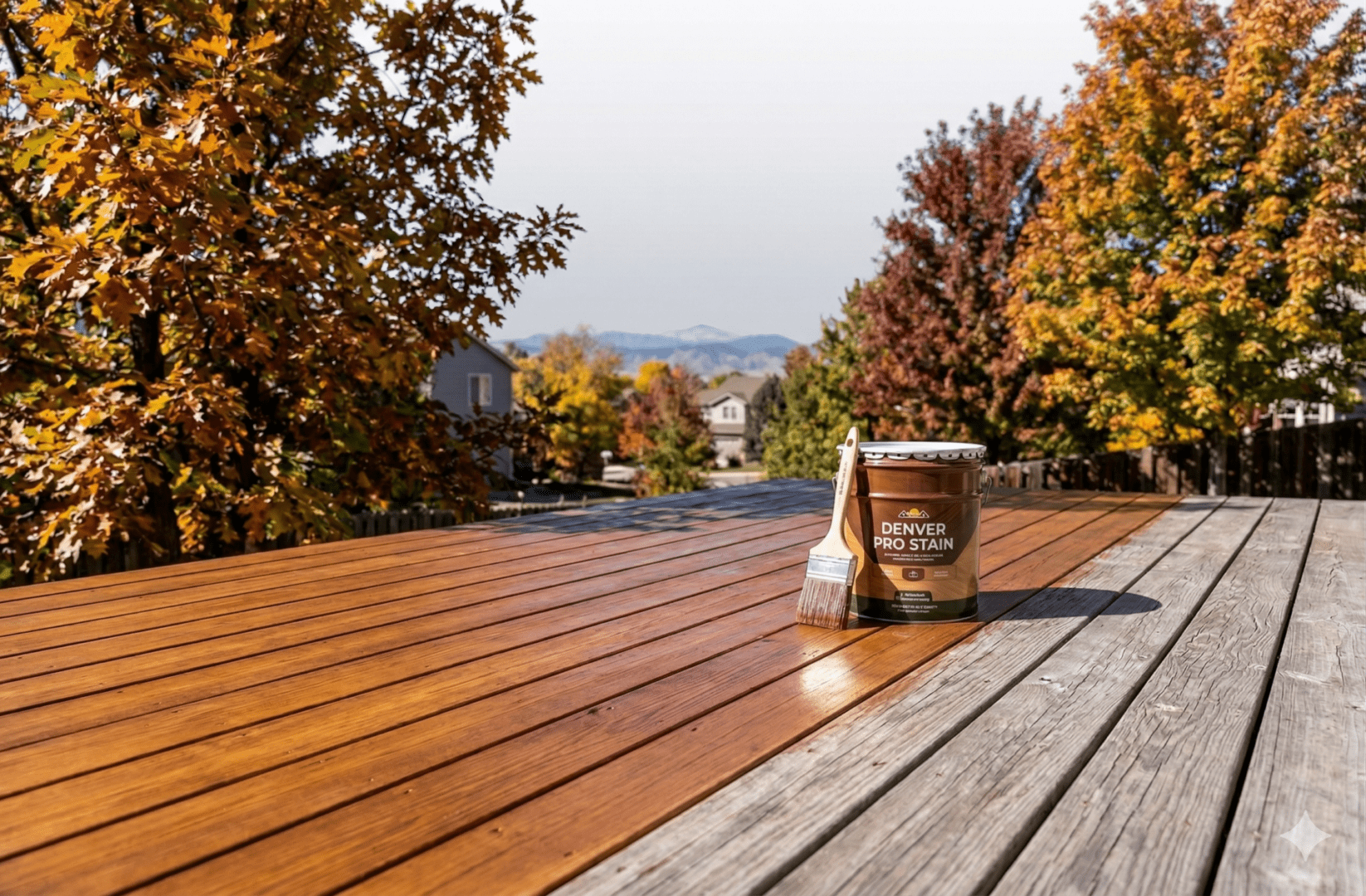
Deck & Fence Staining: Why Fall Is the Best Time in Denver
If you’ve been putting off deck & fence staining Denver projects, fall might be the perfect time to take action. In Denver, seasonal weather patterns play a major role in how well wood surfaces absorb stain and resist long-term damage. Homeowners across the Denver Metro area often assume spring or summer is ideal, but local conditions tell a different story.
With the unique climate along the Front Range—marked by intense sun, sudden temperature shifts, and freeze-thaw cycles—timing your staining project correctly can make a noticeable difference in durability and appearance.
How Denver Weather Impacts Wood Surfaces
Outdoor wood structures in Denver face year-round stress. From snowmelt in late winter to strong UV exposure in summer, decks and fences are constantly expanding, contracting, and drying out.
The Role of Freeze-Thaw Cycles
During colder months, moisture seeps into wood. When temperatures drop, that moisture freezes and expands, causing:
- Small cracks in the wood surface
- Warping and splitting over time
- Reduced effectiveness of previous stain coatings
This is why proper wood protection Denver homeowners rely on is not just about appearance—it’s about structural longevity.
Summer Sun and UV Damage
Denver’s high elevation means stronger UV exposure. Over time, this leads to:
- Fading and discoloration
- Dry, brittle wood fibers
- Reduced moisture resistance
By the time fall arrives, many decks and fences are already showing signs of wear.
Why Fall Is the Ideal Season for Deck & Fence Staining Denver in Denver
Fall offers a unique window where weather conditions align perfectly for staining projects.
Stable Temperatures Improve Absorption
Unlike summer heat or winter cold, fall temperatures in Denver are typically moderate. This allows stain to:
- Penetrate deeper into the wood
- Dry evenly without rapid evaporation
- Bond effectively for longer-lasting protection
Lower Moisture Levels
After the summer storm season, wood surfaces are usually drier in early fall. This creates ideal conditions for fence staining Colorado homeowners can rely on for consistent results.
Less Risk of Weather Interruptions
Spring often brings unpredictable rain, while winter introduces freezing temperatures. Fall provides:
- More predictable weather windows
- Reduced risk of sudden moisture exposure
- Better curing conditions for stain products
Benefits of Staining Before Winter Arrives
Applying stain in the fall prepares your deck and fence for the harsh winter months ahead.
Protection Against Snow and Ice
A properly stained surface helps repel moisture, reducing the risk of:
- Water penetration
- Freeze-related cracking
- Surface deterioration
Longer Lifespan for Wood Structures
Regular maintenance, especially at the right time of year, helps extend the life of your deck and fence. Fall staining acts as a protective barrier before winter stress begins.
Signs Your Deck or Fence Needs Staining
Not sure if your wood surfaces are ready for staining? Look for these common indicators:
- Faded or uneven color
- Rough or splintering wood
- Visible cracks or warping
- Water soaking into the surface instead of beading
If you notice these signs, scheduling a deck staining Denver service before winter can help prevent further damage.
What to Expect from a Professional Staining Process
Working with a professional ensures that your deck or fence is properly prepared and treated for long-term results.
Surface Preparation Matters
Before applying stain, proper preparation includes:
- Cleaning dirt, debris, and mildew
- Sanding rough or damaged areas
- Allowing the wood to dry completely
Choosing the Right Stain
Different wood types and exposure levels require specific stain products. A professional approach considers:
- Transparency level (clear, semi-transparent, solid)
- UV protection capabilities
- Moisture resistance
This ensures that your deck or fence receives the right level of protection for Denver’s climate.
A Simple Fall Maintenance Checklist
Before scheduling your staining project, use this quick checklist:
- Inspect your deck and fence for damage
- Clean surfaces thoroughly
- Check weather forecasts for dry conditions
- Schedule staining before temperatures drop too low
Planning ahead ensures your project is completed during the optimal fall window.
Why Local Experience Matters in Denver
Not all staining projects are the same. The Front Range climate presents specific challenges that require local knowledge and experience.
At No Limit Roofing and Restoration, we understand how Denver’s weather patterns affect exterior surfaces. While many homeowners know us for roofing, our team also helps protect other exterior elements exposed to the same conditions.
If your home has experienced weather-related wear, it’s also a good time to evaluate your roof. You can learn more about long-term protection through our Roofing Services to ensure your entire exterior is prepared for the seasons ahead.
Plan Ahead for Better Results
Timing plays a critical role in how well your staining project performs over time. Fall provides the balance of temperature, dryness, and stability that allows stain to cure properly and protect effectively.
Delaying until spring may expose your wood to unnecessary winter damage, leading to more extensive repairs later.
Schedule a Professional Inspection
If you’re considering deck staining Denver homeowners trust, early fall is the best time to act. Proper staining now can help protect your investment and maintain the appearance of your outdoor spaces.
No Limit Roofing and Restoration offers guidance based on real local conditions, helping homeowners make informed decisions about their exterior maintenance.
Schedule a Free Roof Inspection today and take the opportunity to evaluate your home’s overall condition before winter begins. A proactive approach now can help prevent costly issues later.